ReCharged Technologies
Building a different kind of public infrastructure.
The Vision
ReCharged began with a question: could public infrastructure create more value for the communities around it?
My original interest extended beyond EV charging. I envisioned publicly accessible technology that could eventually allow people to complete paid digital work, even without owning a computer.
The idea had been developing since approximately 2015, when I first began exploring a model of flexible, accessible work.
EV charging, interactive maps, local information, digital signage, and advertising were part of a broader commercial ecosystem that could support the infrastructure and make it useful while the paid-work opportunity was being developed. Maps and other interactive services were practical interim uses, rather than the full intended purpose of the touchscreens.
The challenge was to find a sustainable model that connected public benefit with commercial viability—including a reliable source of funded tasks and sustainable compensation for participants.
From Concept to Execution
I founded ReCharged Technologies in 2016 and brought together a multidisciplinary team of approximately 12 people to develop the business and its technology.
The work spanned product design, industrial design, engineering, user interfaces, commercial modelling, partnerships, municipal engagement, and business development.
We also established an interdisciplinary advisory network with experienced professionals in technology, transportation, infrastructure, and business. Advisors brought senior experience associated with IBM, Cisco, and Toyota; those backgrounds describe individual experience, not endorsements by those organizations.
I spent considerable time developing site-level financial models, exploring how charging demand, location characteristics, potential utilization, advertising, and complementary revenue sources could support a commercially viable infrastructure network. These were prospective financial analyses, rather than operating profits from a deployed network.
The objective wasn’t simply to build an interesting product. It was to develop a business model capable of supporting widespread deployment.
I performed some functions directly and recruited, hired, or directed specialists for others.
The Physical Prototypes
We developed two physical prototypes during ReCharged’s original operations.
The EV Smart Hub
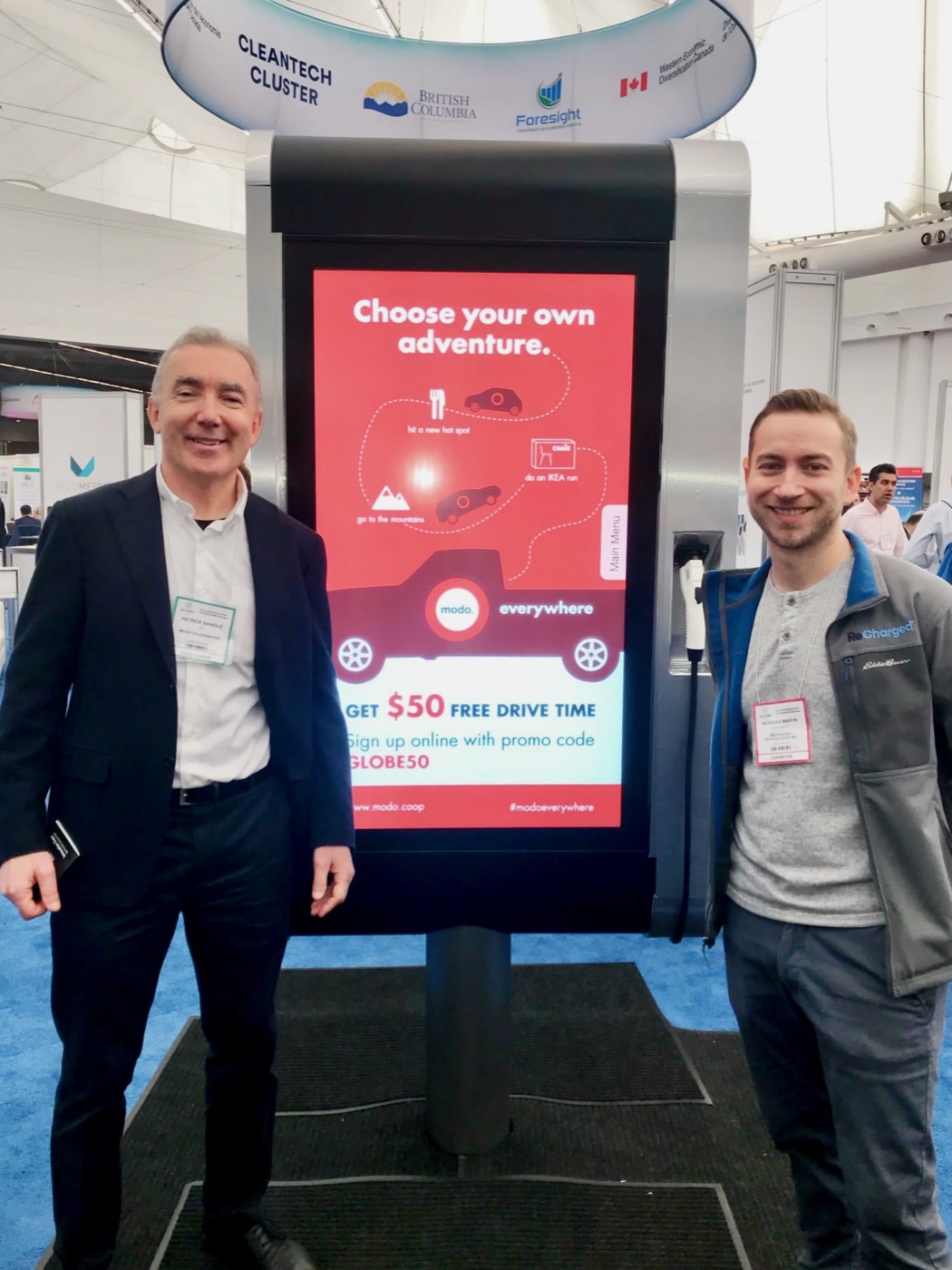
Our first major prototype was a fully functioning, approximately 7.5-foot-tall, dual-sided EV Smart Hub. It combined EV charging with interactive touchscreen technology and digital interfaces designed for public use.
The prototype allowed us to demonstrate a tangible version of the concept, rather than relying solely on renderings and presentations. It was demonstrated publicly at a clean-technology exhibition; the paid digital-work model was not operational on it.
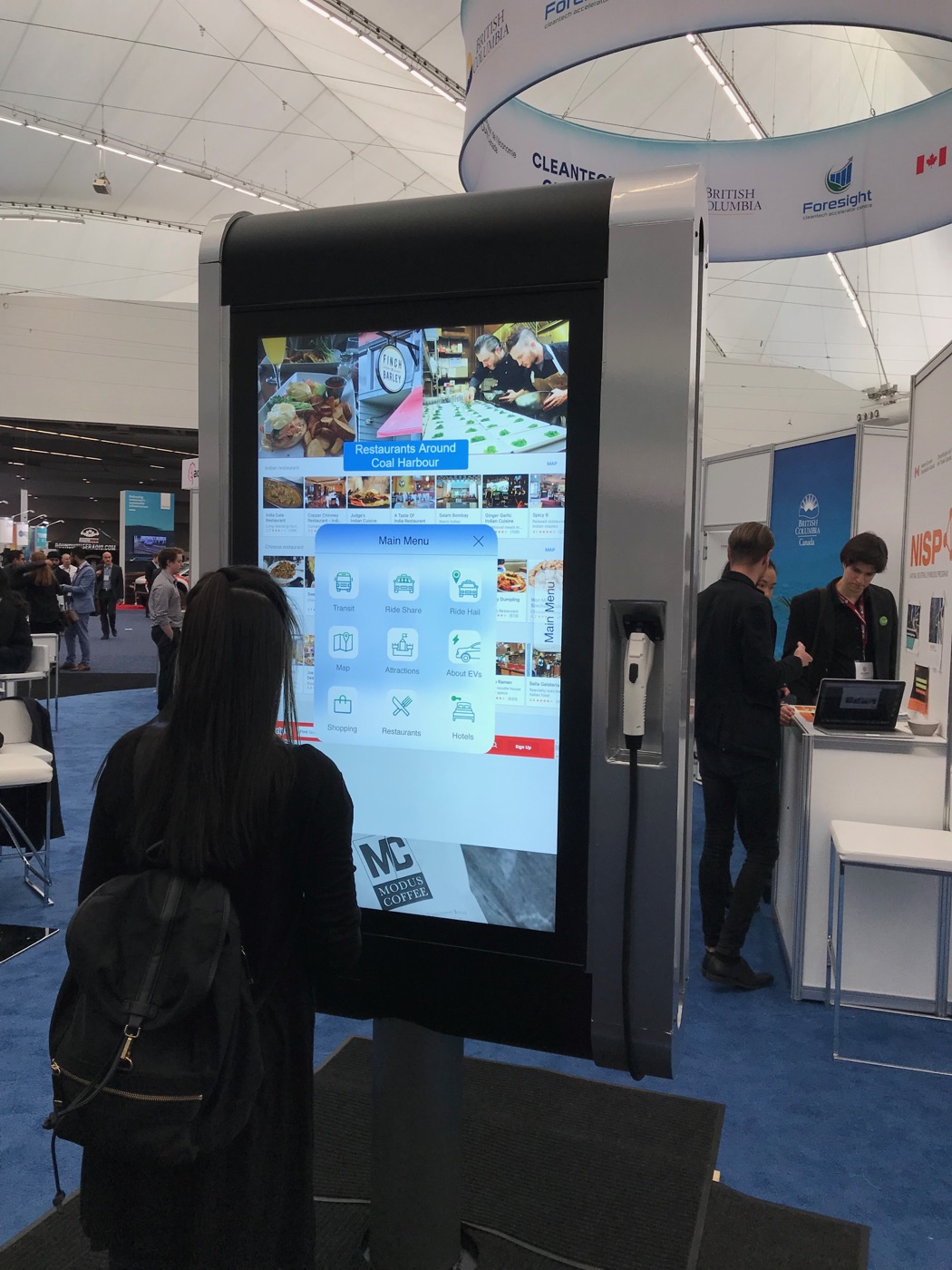
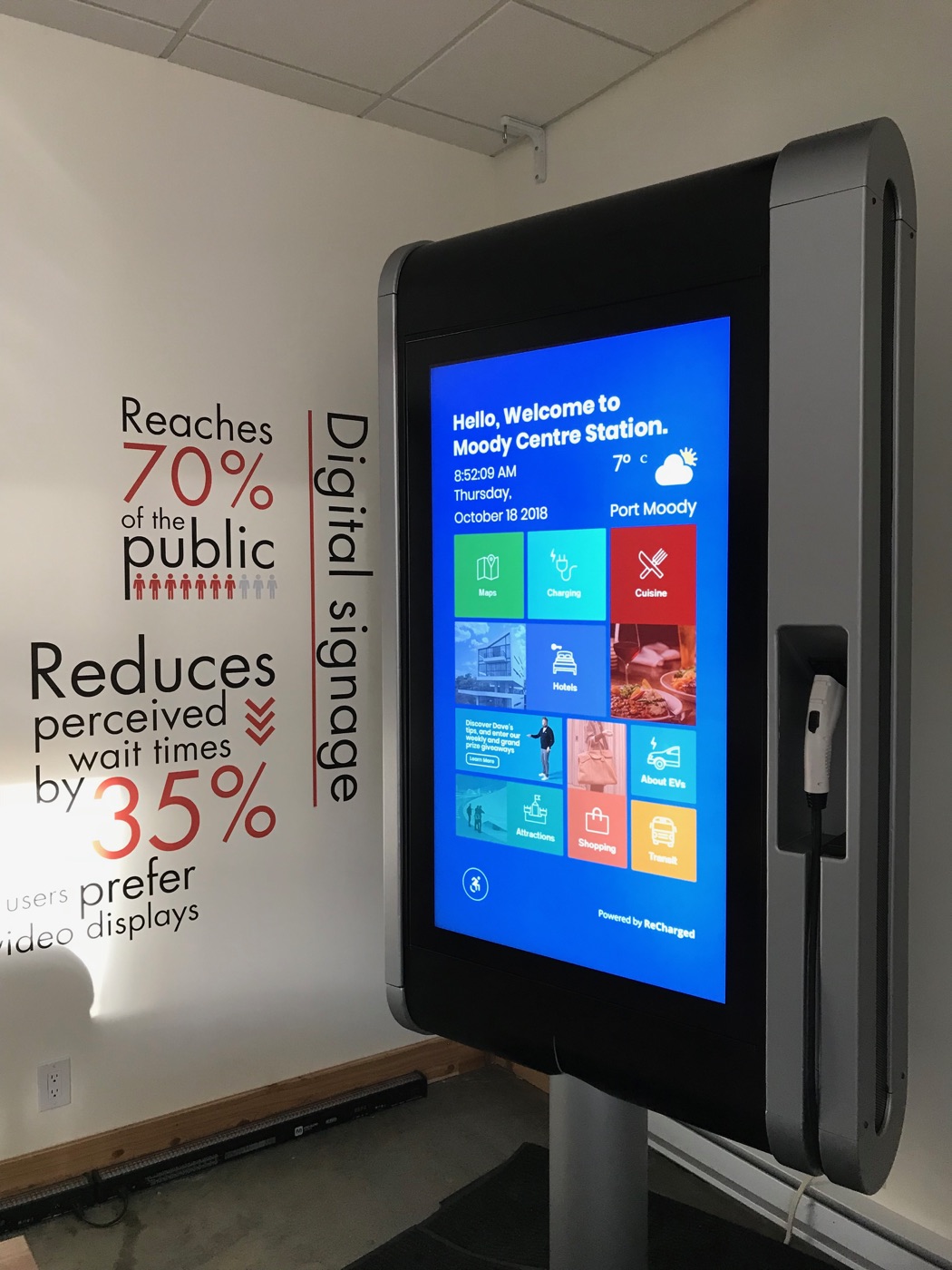
Another view of the showroom prototype
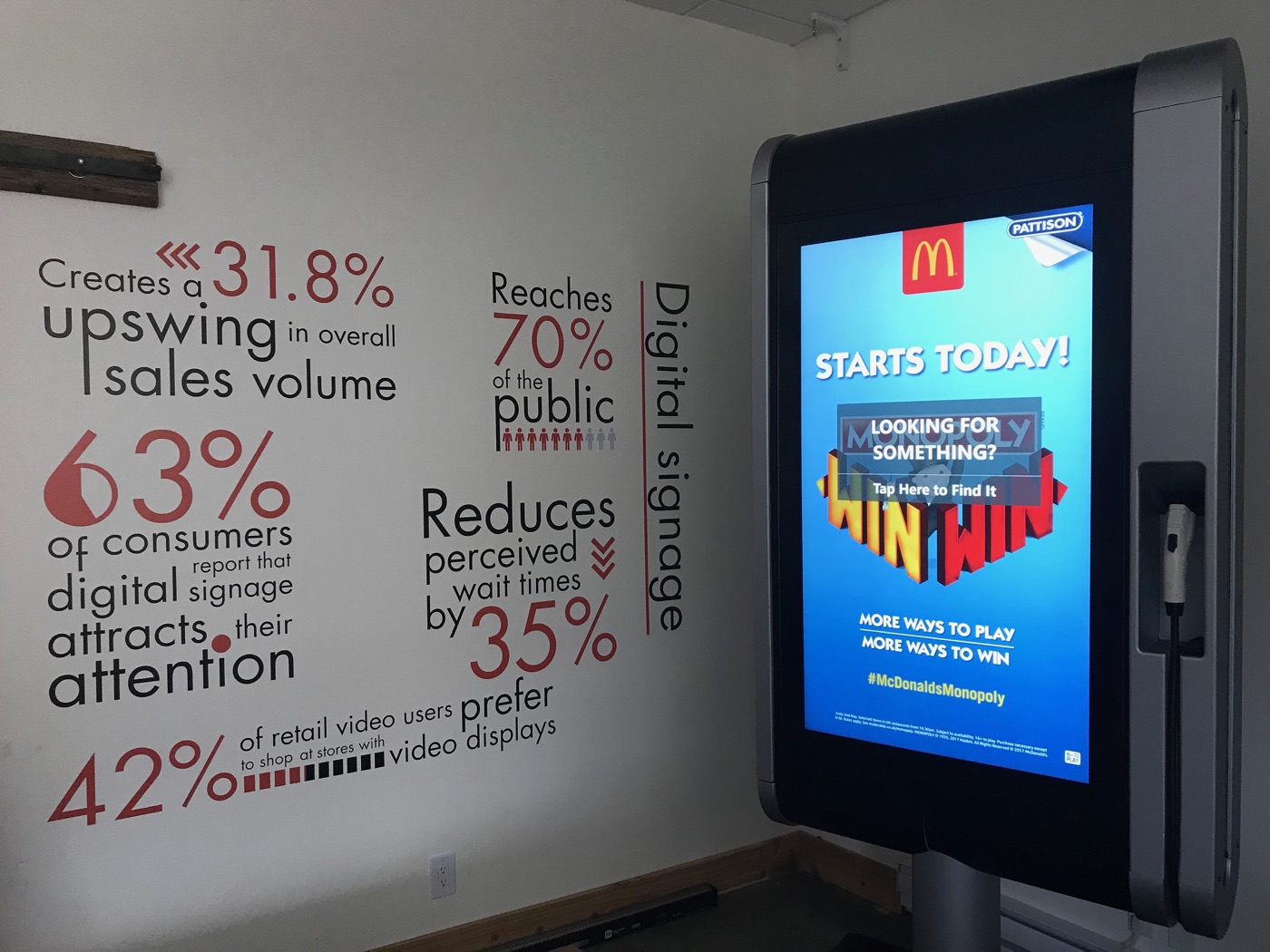
Digital content displayed on the showroom prototype. Advertising content and adjacent signage are part of the photograph, not evidence of partnerships or validated advertising results.
The Bollard Unit
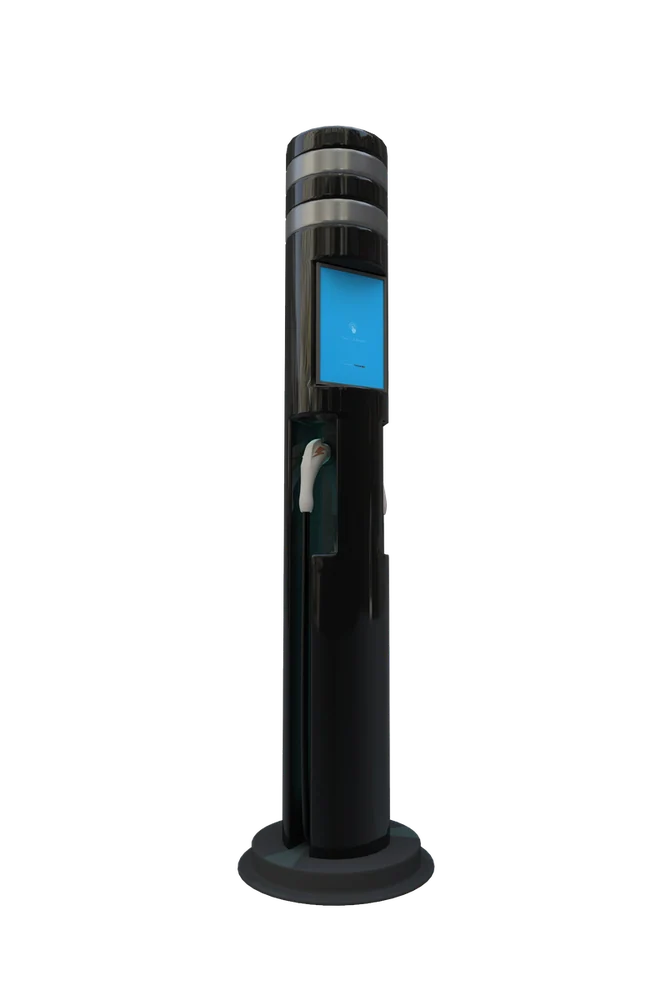
Later, we developed a more compact bollard-style prototype with integrated EV charging hardware and a large embedded touchscreen, approximately the size of a Tesla Model S display.
The second unit explored a different physical format for public charging and interactive technology. It was physically built with its principal hardware integrated, although its exterior finish hadn’t reached the final standard I had envisioned before the original project wound down.
The two prototypes represented different approaches to deploying elements of the broader infrastructure system.
Building Relationships and Exploring Deployment
ReCharged involved extensive engagement with public-sector representatives, commercial organizations, and prospective partners.
We secured two signed letters of intent with municipalities in Greater Vancouver and established a partnership with Modo Car Co-op. The letters recorded intent; they were not completed deployment contracts.
I also met with municipal leaders and government representatives in Canada, China, and the United States to explore infrastructure opportunities and potential deployment, including discussions in multiple Chinese cities and meetings in California and Las Vegas.
These discussions helped us understand the commercial, regulatory, and operational realities of pursuing the concept across different markets.
Solar for Schools
One of the initiatives I was particularly interested in was Solar for Schools.
The proposed model allocated 10% of profits toward installing solar-generation systems at schools in participating communities, subject to the commercial and municipal participation requirements of the program.
The intention was to create a reinforcing relationship between infrastructure growth and local benefit—helping schools reduce energy costs while giving students greater exposure to renewable-energy technology. Potential benefits also included grid contributions during summer periods when school demand was lower.
More value for participating communities could encourage adoption. A larger successful network could generate additional profits, a portion of which could support more school solar installations.
It was an intended component of the business model rather than a program that reached deployment.
Looking Back
ReCharged’s original operations wound down around 2019, before the infrastructure could be deployed at scale.
The experience involved taking an ambitious idea through business development, team formation, technical design, physical prototyping, partnerships, and government engagement.
It also reinforced how important commercial economics, timing, capital requirements, and operational execution are to bringing infrastructure concepts into the world.
Some of the original thinking—particularly around making economic opportunity more accessible—continues to inform ideas I’m exploring today.
ReCharged Work is a renewed exploration of that original ambition. I’ve built an early local video-evaluation prototype, while access to legitimately funded tasks and the underlying economics remain to be validated. It is one part of a wider vision that may include personal-device access, public infrastructure, EV charging, and distributed energy.
ReCharged remains one of the experiences that most shaped how I approach building businesses and technology.